
-
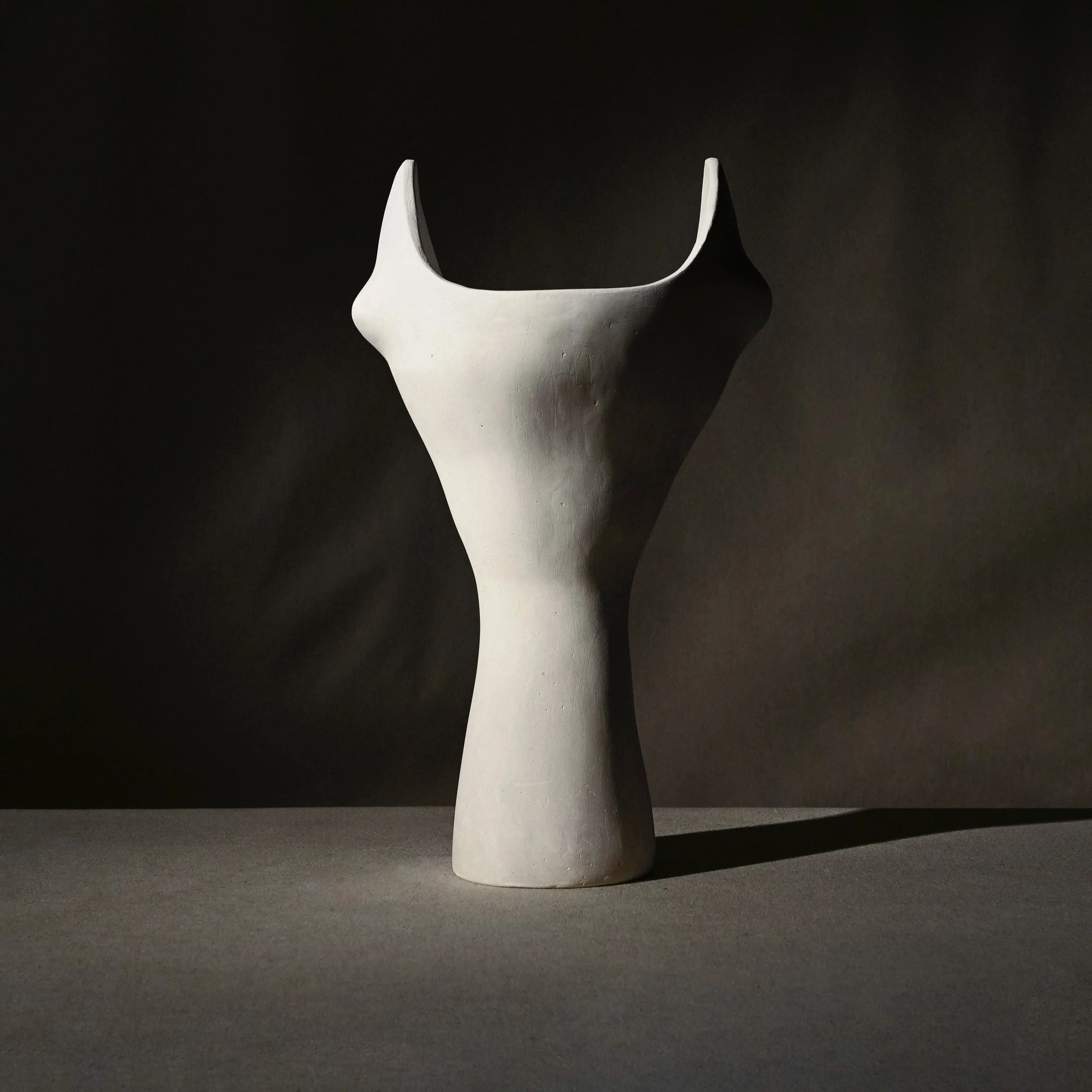
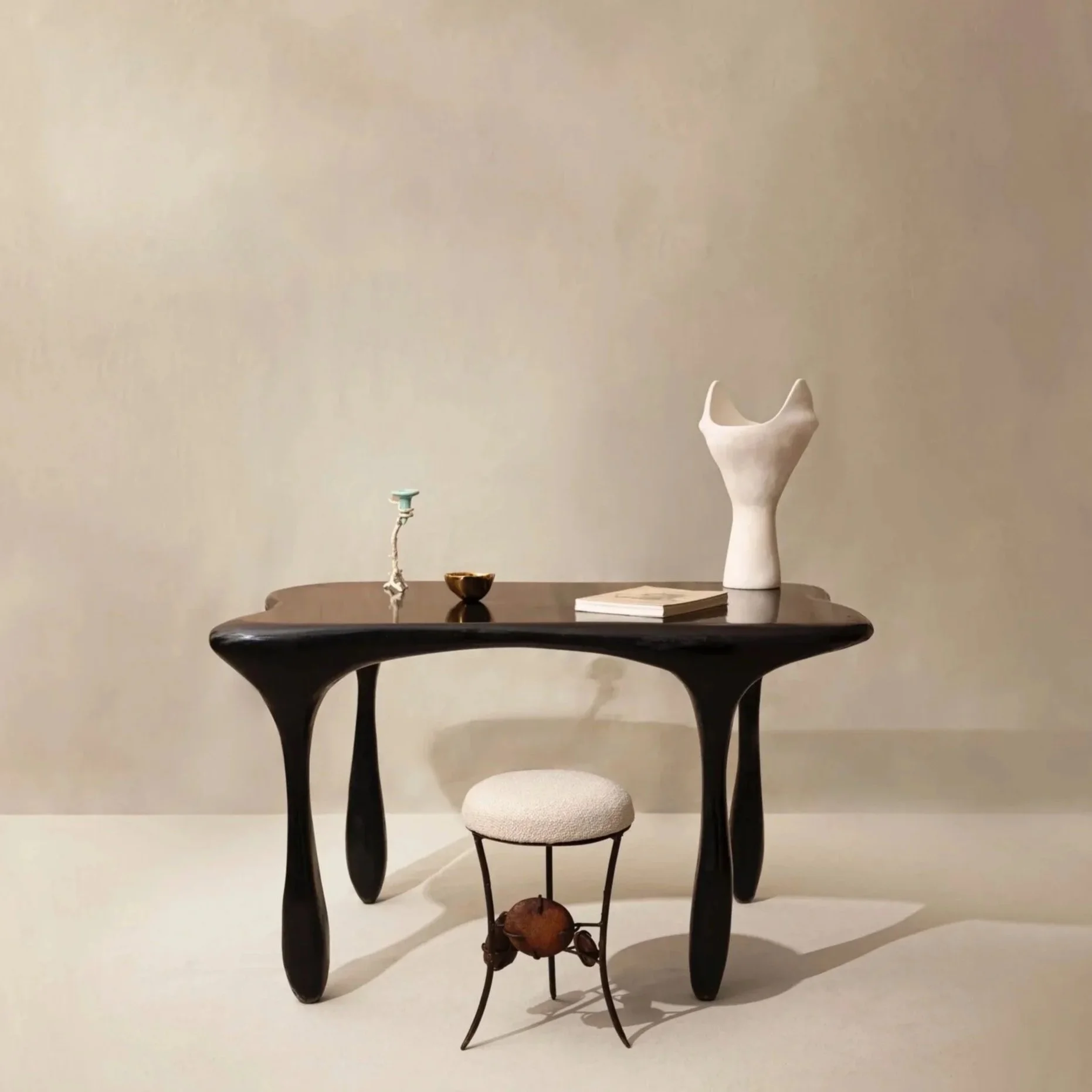
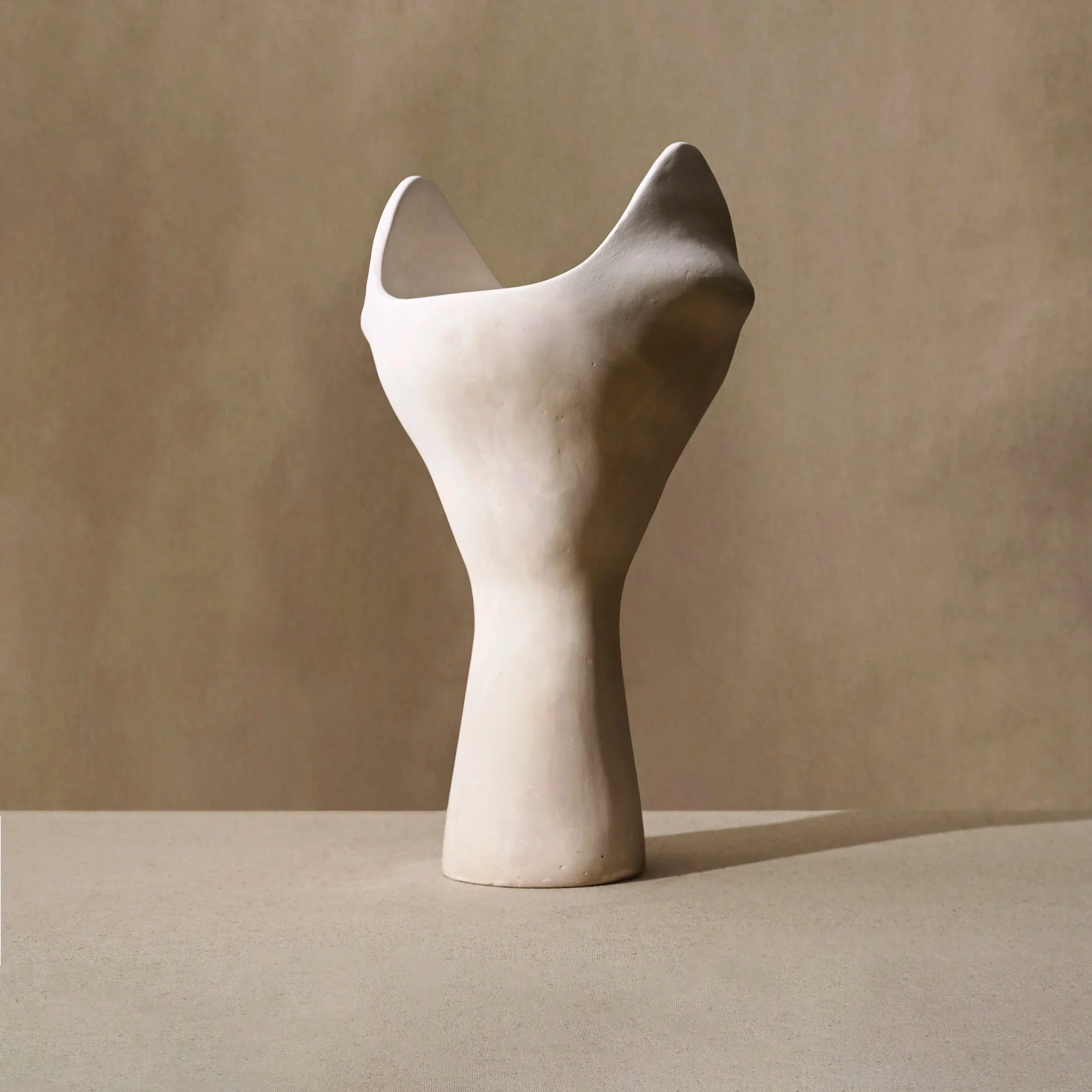
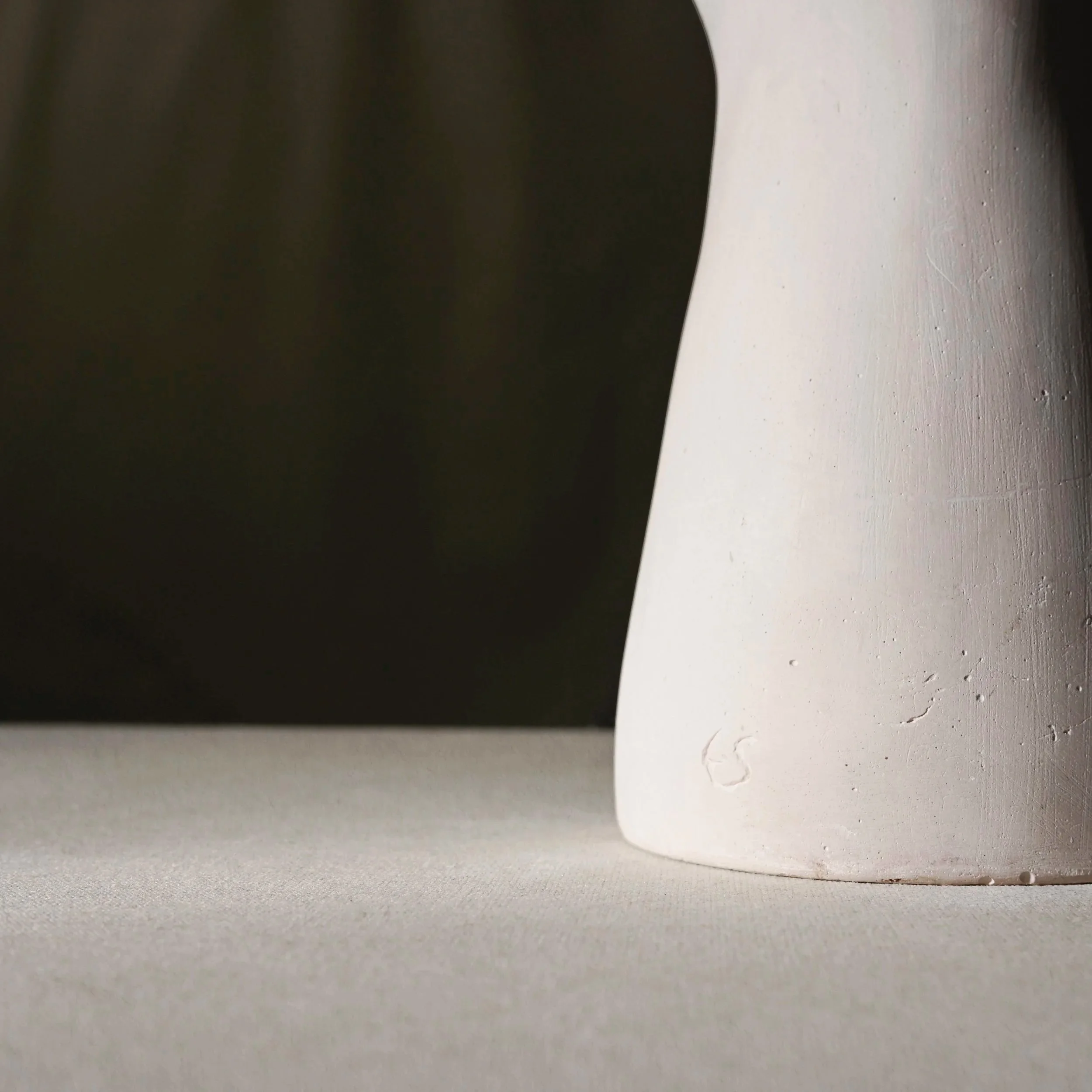
H. 45 x W. 29 x D. 23,5 cm
H. 17 11/16 × W. 11 7/16 × D. 9 1/4 in -
Éric Schmitt was born in 1955 in Toulouse and moved to Paris in the mid-1970s. Before fully dedicating himself to furniture design, he had a first career as a sculptor and musician, exploring the experimental pop music scene and performing in several groups, including Novels and the trio Nous Deux, alongside Charles Serruya.
In 1986, he opened his first workshop in Plaine Saint-Denis, which became the center of his production for several years. There he created his first furniture pieces, with a strong focus on metalwork. That same year, his talent was recognized by Jeanne Gambert de Loche, owner of Maison Jansen. The VIA (Valorization of Innovation in Furniture) gallery organized a solo exhibition: Éric Schmitt – Furniture and Lighting (April 2–13, 1987). This pivotal event brought him into contact with Christian Liaigre and Frédéric de Luca, two major figures in contemporary design and decoration. Liaigre published the Sirènes door handle through his company Manufactor, while de Luca offered Schmitt a decisive collaboration.
Also in 1986, Agnès Kentish and Frédéric de Luca opened En Attendant les Barbares in a new showroom at 25 rue du Faubourg Montmartre, entrusting its design to Éric Schmitt and Jean-Philippe Gleizes. Schmitt presented his Nostradamus lamp there, demonstrating his early ambition to integrate sculptural language into functional objects.
In 1988, as part of the bicentennial of the French Revolution, he created the Marie-Antoinette collection, marking his first major critical and commercial success. Handcrafted in his Plaine Saint-Denis workshop, the pieces are distinguished by their bold use of raw materials and a unique style, both historically inspired and contemporary. That same year, he participated in a group exhibition at the Théâtre du Ranelagh alongside Tom Dixon, André Dubreuil, Mark Brazier-Jones, and Marco de Gueultz, all leading figures in neo-baroque design.
In March 1990, he designed a set of hammered iron and wood furniture for Frédéric de Luca, which was ultimately not produced. A few months later, from June 5 to 23, 1990, the gallery En Attendant les Barbares dedicated a solo exhibition to him at its Rue Étienne Marcel space, highlighting materials central to his work: iron, ceramics, wood, and plaster.
At the same time, Éric Schmitt collaborated with prestigious manufacturers and houses, including Daum, Néotù, and Christian Liaigre. In 1997, the Stade de France project led him to move from Plaine Saint-Denis to Fontainebleau, where he established a new workshop. Since then, he has continued his work as a designer, developing artistically inspired furniture with sculptural forms.
-
En Attendant les Barbares gallery
From the Frédéric de Luca Collection
-
Pierre Doze, Éric Schmitt, Norma, Paris, 2015, p. 233.
Maison Française, September 1990.
For this example:
Casa Vogue, “Eclettico per Amore”, January 1995, p. 100. -
The upper part of the lamp has undergone an invisible restoration. Photographs documenting the lamp prior to restoration are retained on file.